
Course: PCH 226:Pediatrics and Child Health II | kmtc
-
PCH 226: Pediatrics and Child Health II
a) Module Competence
This module is designed to equip the learner with knowledge, skills and attitudes in the management of paediatric diseases and conditions
b) Module Outcomes
By the end of this module , the learner should
- Manage cardiovascular disorders
- Manage genital urinary disorders
- Manage gastrointestinal and hepatobilliary diseases
- Manage hematological and lymph reticular disorders
a) Module Units
- Cardiovascular disorders 20 hours
- Genital urinary disorders 10 hours
- Gastrointestinal and hepatobilliary disorders 20 hours
- Haematological and lymph reticular system disorders 10 hours
-
a) Unit outcomes
a) Unit 1 Cardio vascular system disorders
b) Unit outcomes
By the end of this unit the learner should
- Classify congenital heart diseases
- Manage congenital heart diseases
- Manage rheumatic fever
- Manage rheumatic heart disease,
- Manage infective endocarditis
- Manage congestive cardiac failure
Unit I lesson I
Introduction
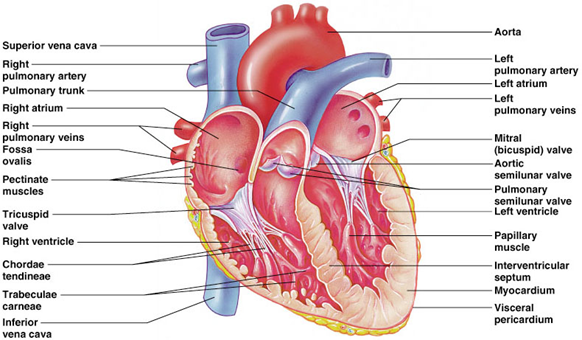
The anatomy and physiology of the CVS
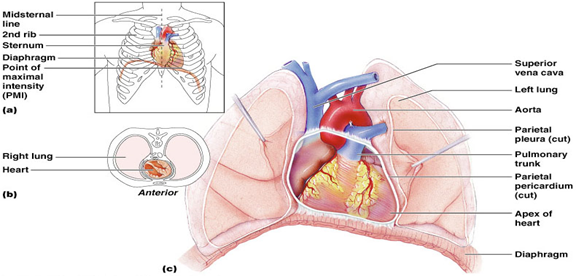
- The heart is Approximately the size of your fist
§ Location
§ Superior surface of diaphragm
§ Left of the midline
§ Anterior to the vertebral column, posterior to the sternum

-
KMTC Kisumu - Pediatrics and Child Health II Quiz
-
MOMBASA KMTC PAEDS II CAT1: MOMBASA MTC (CLASS-2.2) Quiz
-
Students mustReceive a grade
Paediatrics
Start 1.30 pm
Invigilator: Mr. Stanley
All students to be in class and log into kmtc elearning portal by 1.30pm
Good luck
-
Paediatrics II CAT I Quiz
Date: 15/11/2023
This CAT exam will be done on Wednesday 15th November and it will be a 50 minutes exam from 7.00pm to 7.50pm.
It will comprise of 40 MCQ questions
This is only for Mombasa students
Attempt all questions
-
Open all
Close all
-
Instructions: Clicking on the section name will show / hide the section.
-
Module Preliminaries
 Module Competency
This module is designed to equip the learner with knowledge, skills and attitudes in the management of paediatric diseases and conditions
Module DescriptionIntroduction, Anatomy and physiology, definition , causes, manifestation, diagnosis and treatment.
Learning Outcomes
By the end of this module, you will have gained sufficient skills to:- Manage cardiovascular disorders
- Manage genital urinary disorders
- Manage gastrointestinal and hepatobilliary diseases
- Manage hematological and lymph reticular disorders
Learning Support
However, if you have a technical problem relating to interacting with the platform, you can write an email to elaerning@kmtc.ac.ke.
Performance Tasks
Within the various units and topics in the module, there are tasks that you are supposed to attempt and submit for marking. Some of them are not meant for submission. For those that are meant for submission, you are encouraged to be very keen to observe due date because once the date lapses, you will not be able to submit the same. Calling support line will not help you on this. If you are not able to upload an assignment, seek help well in advance before the due date. Otherwise, this will not be used as an acceptable reason for not submitting on time.These tasks are divided into two as follows:(i) Main Tasks that comprise of quizzes and written assignment
(ii) Sub tasks that comprise group discussion and clinical logs.
Learning Requirements
For effective and smooth learning, it is expected of you to be computer proficient. Additionally, to satisfactorily complete this module, it is required of you to;- Submit assignment and required tasks on time
- Participate in discussion forums as and when they are scheduled.
- Participate in chat sessions as and when they are scheduled.
- Sit for CAT’s when scheduled, and
- Sit in Exam at the end of the session.
-
Unit One: THE Cardiovascular system disorders in children
a) Introduction
Introduction
The anatomy and physiology of the CVS
- The heart is Approximately the size of your fist
§ Location
§ Superior surface of diaphragm
§ Left of the midline
§ Anterior to the vertebral column, posterior to the sternum
a) Unit outcomes
By the end of this unit the learner should
- Classify congenital heart diseases
- Manage congenital heart diseases
- Manage rheumatic fever
- Manage rheumatic heart disease,
- Manage infective endocarditis
- Manage congestive cardiac failure

To proficiently complete this unit, you ought to make sure you spend quality time and purpose to;c) Unit Learning Requirements
- Carry out all tasks within the sections and subsections
- Participate in discussion forums as and when they are scheduled.
- Participate in chat sessions as and when they are scheduled.

Diagnose and manage congenital heart diseases in children
Classify congenital heart diseases
Discuss CHD under the following
◦ Definition
◦ Pathology
◦ Manifestation
◦ Diagnosis
◦ Treatment
CHD are classified into 2
Acyanotic heart diseases (does not present with cyanosis)
VSD
ASD
PDA
Pulmonary stenosis
Coarctation of the aorta
Aortic stenosis
Hypertrophic obstructive cardiomyopathy
Dextrocardia
-
Students mustViewGo through the activity to the end
-
Unit One Activities
a) Review Questions/Unit Activity
Classify congenital heart diseases
Describe the 4 defects of TOF
outline the diagnosis of rheumatic fever
Manage rheumatic heart disease

b) Performance Tasks
discuss the management of CCF in children
(i) Main Tasks
illustrate the fetal circulation
(ii) Sub -Tasks
[Discussion forum tool and chat tool below will be used for carrying out group work..]
-
-
-
-
Students mustMark as done
KENYA MEDICAL TRAINING COLLEGE
FACULTY OF CLINICAL SCIENCES
DEPARTMENT OF CLINICAL MEDICINE
DIPLOMA IN CLINICAL MEDICINE & SURGERY
YEAR 2, END OF SEMESTER 1 EXAMINATION
KENYA MEDICAL TRAINING COLLEGE
FACULTY OF CLINICAL SCIENCES
DEPARTMENT OF CLINICAL MEDICINE
DIPLOMA IN CLINICAL MEDICINE & SURGERY
YEAR 2, END OF SEMESTER 1 EXAMINATION
PAPER: Paediatrics & Child Health I - MARKING KEY
DATE: 19th July, 2022 TIME: 2 HOURS (8.00 AM – 10.00 A.M)
INSTRUCTIONS
1. Attempt ALL Questions.
2. Write your REGISTRATION NUMBER on all the answer sheets provided and on the question paper.
3. Ensure that all examination answer scripts are handed in at the end of the examination.
4. Ensure you sign the examination register provided.
5. Any examination malpractices will be handled as per the College Examination Policy.
REGISTRATION NUMBER …………………………………………………………………
-
-
Unit Two: Genital urinary disorders
a) Introduction
This unit will equip you with knowledge on diagnosis and management of genital urinary disorders- congenital disorders, UTI, AGN, nephrotic syndrome, renal failure and Nephroblastoma, Neuroblastoma

b) Unit Objectives
By the end of this unit, you will have achieved the following objectives;
- diagnose and manage genital urinary disorders in children

To proficiently complete this unit, you ought to make sure you spend quality time and purpose to;c) Unit Learning Requirements
- Carry out all tasks within the sections and subsections
- Participate in discussion forums as and when they are scheduled.
- Participate in chat sessions as and when they are scheduled.

-
Students mustViewGo through the activity to the end
-
Unit Two Activities
a) Review Questions
[To be provided...]

b) Performance Tasks
(i) Main Tasks
[The lecturer will provided further instructions on this in addition to the provided tools below...](ii) Sub -Tasks
[Discussion forum tool and chat tool below will be used for carrying out group work..]
-
-
Unit Three: Hepatobiliary Disorders
a) Introduction

b) Unit Objectives

To proficiently complete this unit, you ought to make sure you spend quality time and purpose to;c) Unit Learning Requirements
- Carry out all tasks within the sections and subsections
- Participate in discussion forums as and when they are scheduled.
- Participate in chat sessions as and when they are scheduled.

-
Students mustViewGo through the activity to the end
-
Unit Three Activities
a) Review Questions
[Read and make short notes on Intussusception in Paediatrics]

b) Performance Tasks
(i) Main Tasks
[The lecturer will provided further instructions on this in addition to the provided tools below...](ii) Sub -Tasks
[Discussion forum tool and chat tool below will be used for carrying out group work..]
-
Unit Four: Change and change management
a) Introduction
Change is fundamental in order to guarantee long term success in the organization. Some organizations change in response to external circumstances (reactive change) and others change because they have decided to change (proactive change)

b) Unit Objectives
By the end of this unit, you will have achieved the following objectives;
- Explain the concept of change
- Analyze the process of managing change.
- Identify reasons for resistance to change and how to overcome it

To proficiently complete this unit, you ought to make sure you spend quality time and purpose to;c) Unit Learning Requirements
- Carry out all tasks within the sections and subsections
- Participate in discussion forums as and when they are scheduled.
- Participate in chat sessions as and when they are scheduled.

-
Students mustViewGo through the activity to the end
-
Unit Four Activities
a) Review Questions
[To be provided...]

b) Performance Tasks
(i) Main Tasks
[The lecturer will provided further instructions on this in addition to the provided tools below...](ii) Sub -Tasks
[Discussion forum tool and chat tool below will be used for carrying out group work..]
-